
Pomeranian or Kleinspitz?
Key differences in size, body structure, coat, and heritage: an essential expert guide to conscious puppy selection.
1. The Common Origin: German Spitz Varieties
Both the Pomeranian and the Kleinspitz belong to the ancient German Spitz (Deutscher Spitz) breed family under FCI Standard No. 97. While they share ancestors and the iconic fox-like expression, they are classified into strictly defined, separate size varieties.
The Pomeranian (Zwergspitz) is the smallest representative of the group, refined over centuries into a lavishly coated companion dog. The Kleinspitz is slightly larger, retaining the classic proportions of the miniature working and farm spitz.
2. Side-by-Side FCI Standard Comparison
| Feature | Pomeranian (Zwergspitz) | Kleinspitz (Miniature Spitz) |
|---|---|---|
| FCI Height at Withers | 21 ± 3 cm (18–24 cm) | 27 ± 3 cm (24–30 cm) |
| Typical Weight Range | Approx. 1.8 – 3.0 kg | Approx. 3.5 – 5.5 kg |
| Muzzle Proportion | Shorter, delicate, approx. 2:4 to 1:2 ratio to skull | Slightly longer, classic wedge-shaped fox muzzle |
| Coat Characteristics | Dense, plush double coat, prominent standing frill | Long, straight outer coat with moderate undercoat |
| Tail Carriage | Carried flat over the back with luxurious plume | Curled gracefully over the back |
3. Puppyhood Identification: What to Look For
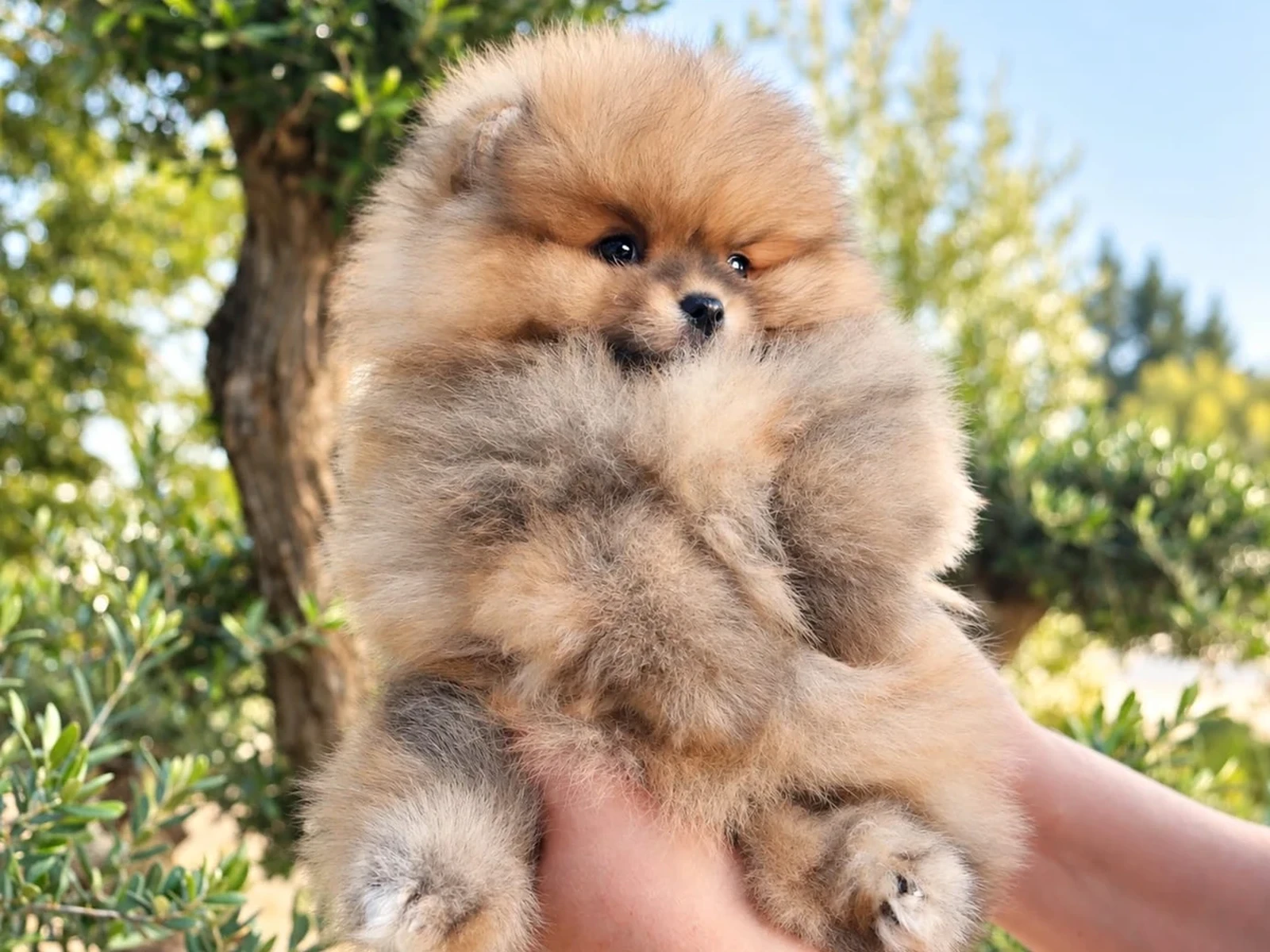
At 8 to 12 weeks of age, distinguishing between a Pomeranian and a Kleinspitz based solely on a photograph is virtually impossible even for experienced dog lovers. Both puppies appear as adorable, fluffy balls of fur.
This is why verified FCI pedigree documentation is of paramount importance. The documented lineage confirms that the ancestors across multiple generations adhered to the true Pomeranian standard, preventing unexpected growth surges in adulthood.
4. The Myth of "Teacup", "Mini", and "Boo" Puppies
Reputable breeders never advertise "Teacup Pomeranians" or "Mini Spitzes". The FCI recognizes exactly one standard size for the Pomeranian. Unscrupulous backyard sellers often use these labels to market prematurely separated, underdeveloped, or sickly puppies at inflated prices.
Similarly, the popular "Boo haircut" (shaving the double coat into a round teddy bear shape) can permanently damage the sensitive hair follicles, leading to post-clipping alopecia and impaired thermoregulation.
5. Our Commitment to Health and Heritage
At Magic Little Foot, our breeding program is built upon more than 15 years of dedicated experience and champion bloodlines from renowned European and American kennels. Every puppy receives comprehensive veterinary health examinations, microchipping, age-appropriate vaccinations, and socialisation within our family home.
Frequently Asked Questions
Authoritative answers to common questions about Pomeranians and Kleinspitzes
What is the main difference between a Pomeranian and a Kleinspitz?
The most noticeable difference is size. Under the official FCI Standard No. 97, the ideal height at withers for a Pomeranian (Zwergspitz) is 21 ± 3 cm (18–24 cm), whereas a Kleinspitz measures 27 ± 3 cm (24–30 cm). Subtle differences also exist in facial proportions, muzzle shape, bone substance, and coat fullness.
Is a Pomeranian the same as a Dwarf Spitz?
Yes. Pomeranian and Zwergspitz (Dwarf Spitz) refer to the exact same size variety of German Spitz. 'Pomeranian' is the universally used international name, while 'Zwergspitz' is the traditional German designation in FCI documentation.
Is a Pomeranian the same as a Miniature Spitz (Kleinspitz)?
No. The Pomeranian (Zwergspitz) and Kleinspitz are two distinct size varieties within the German Spitz breed group. The Pomeranian is the smallest variety, while the Kleinspitz is one size tier larger.
What is the adult size of a Pomeranian?
According to the FCI breed standard, an adult Pomeranian should have a height at the withers of 21 cm ± 3 cm (ranging from 18 cm to 24 cm).
How much does an adult Pomeranian weigh?
The FCI standard prioritises overall anatomical balance and height over a rigid weight threshold. In practice, a healthy adult Pomeranian typically weighs between 1.8 kg and 3.0 kg, in harmonious proportion to their skeletal structure.
What is the adult size of a Kleinspitz?
Under the FCI standard, an adult Kleinspitz has an ideal wither height of 27 cm ± 3 cm (ranging from 24 cm to 30 cm).
Can you tell a Pomeranian from a Kleinspitz in early puppyhood?
Not with certainty from a photo alone. True breed distinction requires verified multi-generation FCI pedigree documentation, evaluation of parental bone structure, and tracking developmental growth milestones.
Do 'mini', 'teacup', or 'micro' Pomeranians exist?
No. The FCI recognises no such categories as 'mini', 'teacup', or 'micro Pomeranian'. These are purely commercial marketing terms, often associated with unethical breeding and serious health risks.
Is the 'Boo' Pomeranian a separate breed?
No. 'Boo' was an individual Pomeranian that became an internet sensation due to a specific round teddy-bear haircut. It is neither a separate breed nor an FCI standard appearance.
How should I choose a purebred Pomeranian puppy?
Always look beyond appealing puppy pictures. Choose a reputable breeder who provides verified FCI pedigree papers, comprehensive veterinary health records, written guarantees, and transparent information regarding parents and living conditions.
Looking for a Purebred FCI Pomeranian?
Explore our currently available puppies raised in a loving family environment with verified pedigrees.